
Sometimes it’s hard to make those big changes to support your health. Gross health food, sweaty exercise, fistfulls of suppliments – no one likes that and normally if it isn’t easy to do and pleasant it’s human nature to give up after awhile so lets make something tasty!!!
If you have tried Kombucha, Apple Cider Vinegar probiotic beverages or Water Kefir and don’t like it or can’t keep up with tending to your scoby, there is good news. There are many other ways to make a probiotic beverage that doesn’t require keeping a scoby or kefir grains alive. The secret is yeast.
Yeast:
The most basic way to make a probiotic soda is to inoculate a fruit beverage with some sort of “starter”. I use yeast. This can be wild harvested yeast (more on that later), commercial yeast, or you can even use some commercially available or home made kombucha to get things going. Once you have added your yeast of choice to your juice, sit back and let time do the work. Your beverage should have fermentation bubbles in a few moments up to a few hours depending on how much you added to your juice.
Liquid Yeast:
Wild yeast is any yeast that is acquired from the skin of something that naturally contains yeast. My two favorite ways to acquire wild yeast are from a ginger rhizome or a turmeric rhizome. Some people use apple skins or other fruit skins but the process is the same. Peel (or for ginger and turmeric can slice up the root) your fruit, add to a jar of water with a loose lid, add some sugar and check in on it daily until it starts to bubble. Once it is bubbling you can store it in the fridge or a pantry and feed it sugar every once in a while to keep it alive (I use sugar cubes so I can plop a few in without having to measure). To make it into soda use a tablespoon or two of active liquid and add to a flip top bottle (more yeast starter if your bottle is over 8 oz). Cap your bottle and check daily for signs of fizz. Once it has fizzed to your liking you can keep it in the fridge for up to a week to slow the fermentation. The process is the same if you are using kombucha to start the get things going. I’ve had mixed results with commercially available kombucha so I alway look to make sure it says it is raw. GT Dave is my favorite brand.
Dried Yeast
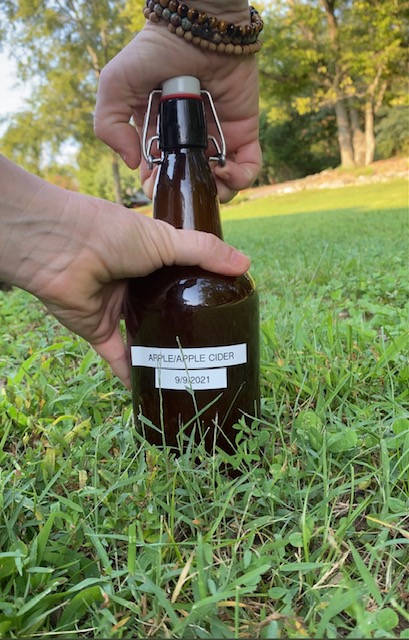
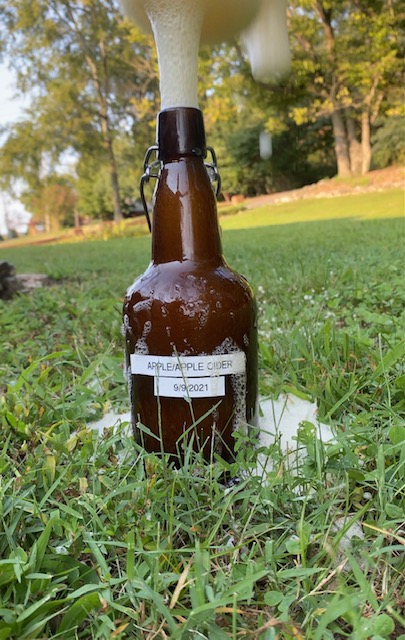
I ordered champagne yeast for my most recent batches of cider but you can actually use several different types of yeast including bread yeast. (Though the taste isn’t as great because it has bread like flavors and it has different strains of enzymes, but if that’s all you have, work with what you’ve got!). When trialing how much yeast to use I quickly realized that a little goes a long way and 1/2 tsp for 8 oz was too much! also, it’s important to make sure that the yeast is put in after you have filled the bottle half full because it has a tendency to stick to the bottom or float along the top. I stir mine in with a wooden skewer or a chopstick. My cider was nice an effervescent within a day.
How is drinking fermented juice beneficial to your health? Well, this type of yeast (Saccharomyces cerevisiae) is actually used medicinally and has antiviral and antibacterial properties. It has been shown to remedy chronic Candida overgrowth, and is a good medical choice for chronic acne, diarrhea and immune system stimulation. It is rich in B vitamins, chromium and selenium as well. How cool is that?
If you are interested in learning more about probiotic sodas, I’d love for you to join me on September 26,2021 for my class on Herbal Beers and Probiotic Sodas. Tickets can be found on Eventbrite

 Thorn and Thistle Apothecary