
This St. Patricks day, under the threat of a severe weather alert and tornado warning, I decided to run out and gather some spring greens I had been keeping track of in case hail or flooding damaged my little patch!
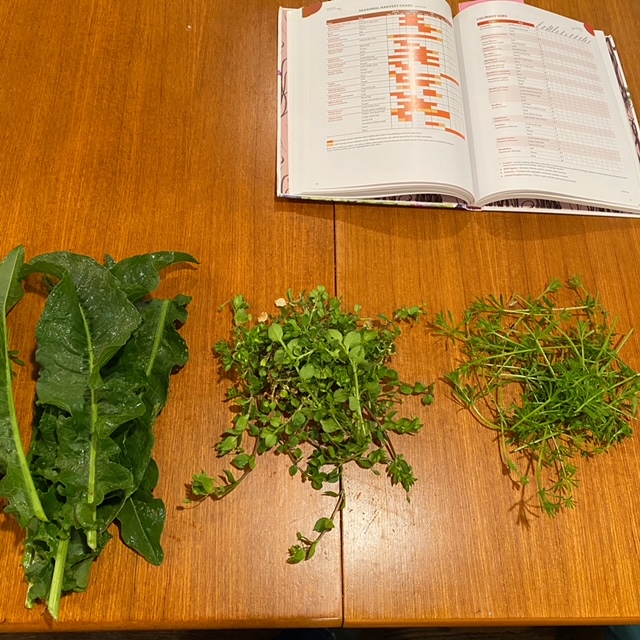
After a long grey winter I have been feeling sluggish, unmotivated and somehow .. stuck. Spring is an excellent time to help your body shake off the winter in your blood and renew yourself. These common three herbs are helpful
1.) Yellow Dock/ Curly Dock (Rumex Crispus)
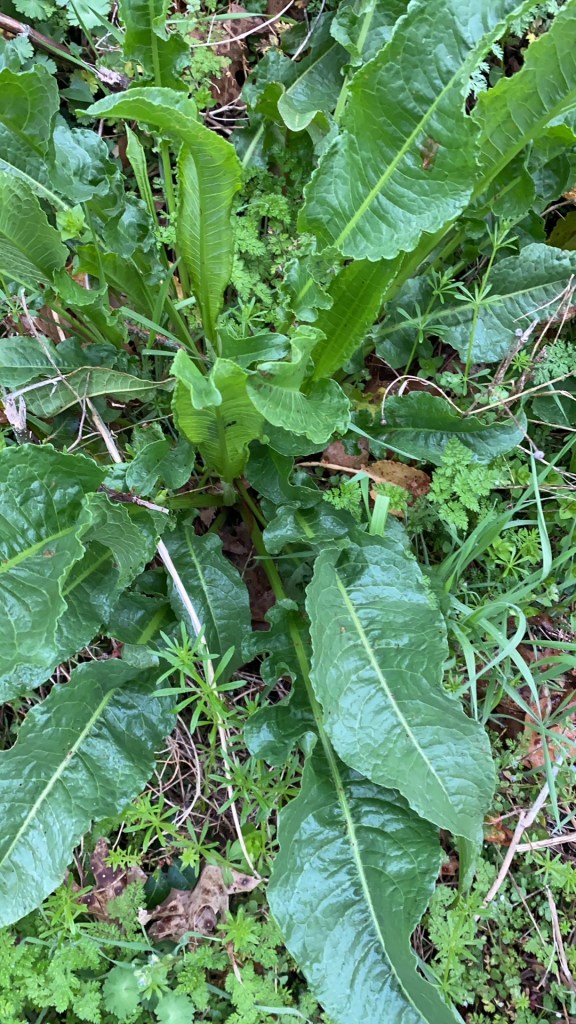
The leaves of curly dock are hairless, long and narrow, and often have wavy or curly edges—which is where it gets its common name. The plant has both basal leaves and leaves on the stem, which are alternate. Basal leaves can be as long as 12 inches and around 2 ½ inches wide; the leaves become smaller as they ascend the stem. A thin whitish sheath grows around the node (where the petiole and stalk meet.) This sheath becomes brown and papery with time and eventually disintegrates. The main stem is ribbed, stout, and mostly unbranched. The plant can reach heights of one to five feet at maturity.
Uses:
- Cooked: Curly dock leaves are rich in vitamins C and A, and offer a bitter, lemony taste. The leaves can be sauteed or added to soups.
- Infused: The dried roots of the herb can be prepared as an herbal tea for helping rheumatism, liver problems, and sore throats. When applied topically, a longer herbal decoction of the roots can help relieve skin sores.
Traditionally curly dock was used for constipation (it encourages peristalsis) and to reduce inflammation. It contains both antioxidant and antihistamine properties as well as hypoglycemic and anti-viral effects. Its taste is bitter and astringent so if you plan on eating it definitely pick the youngest leaves possible from areas that are away from roads and areas sprayed with pesticides (like near power lines).
2.) Cleavers (Galium aparine)
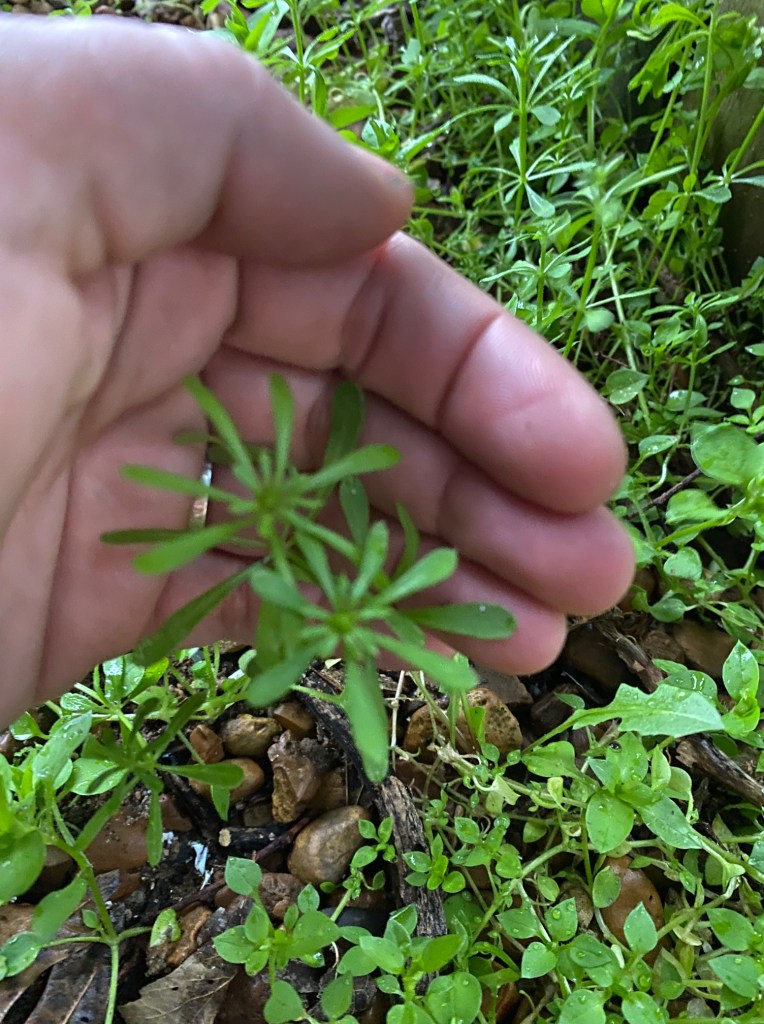
- Cleavers plants have leaves that grow in “whorls”, which is to say that they grow out from the stem in a star-like way.
- Each “whorl” of leaves on cleavers have 6-8 leaves. More or less may indicate a different Galium variety.
- The stems of cleavers are very angular or square. The edges will feel almost sharp and the whole plant will feel sticky (which is where the name came from, “to cleave”)
- Both the leaves and stem of cleavers are covered in small, fibrous hairs, which actually end in tiny hooks. The seeds, when present, will also have these hooked hairs. These hooks help the plant stick to fabric, hair, fur, and other plants. It’s important to find the hairs on both the stem and the leaves; some other Galuims have smooth leaves.
- Individual cleavers plants can grow to be 2-3 feet long, however, they rarely appear to be more than 6-7 inches off the ground, as they grow horizontally along the ground.
- The leaf shape of cleavers versus other Galiums is subtle, but essential for identification. Each leaf is thin, and wider at the end than it is in the middle or near the stem. (Some other Galium varieties are widest at the middle.) The end of the leaf is rounded, or rounded with a tiny point at the very end. Though there may be a point at the end of a round end, the overall shape should not be “pointed”.
- When in flower, cleaver blooms are small, white and nestle-in with the leaves, and not a large plume of blossoms off the end of the plant, as with some other varieties of Galium.
- Cleavers do not branch, the entire stem is one long piece. If your plant branches or splits into two stems at a whorl of flowers, it’s a different variety of Galium.
Uses:
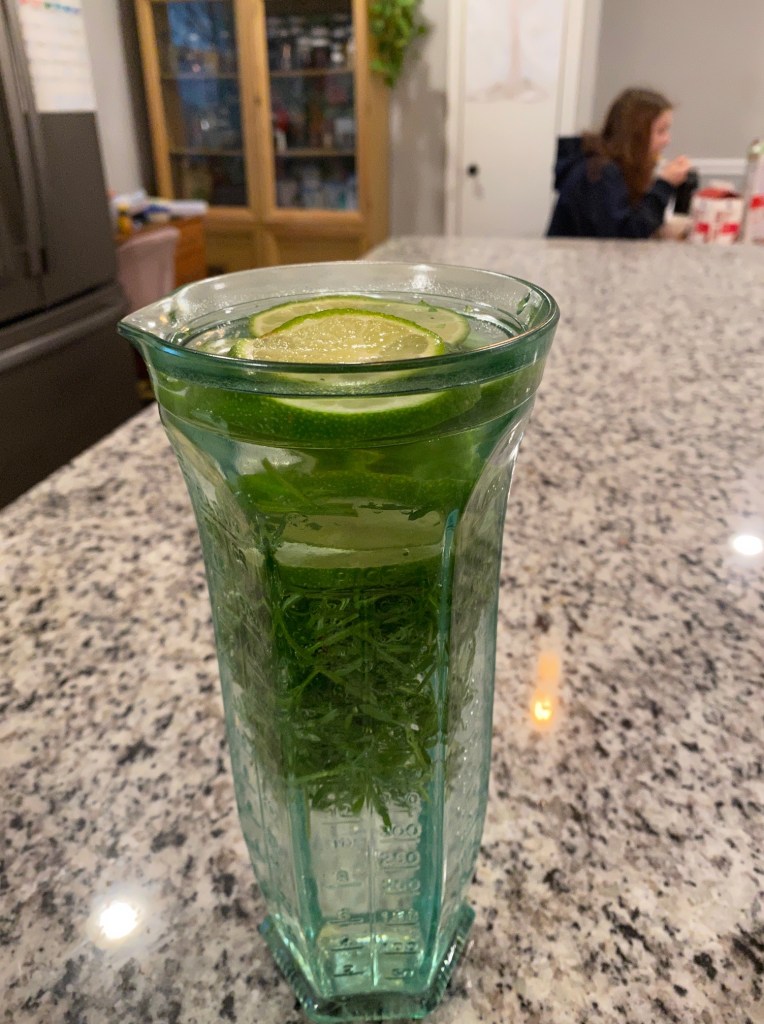
Due to it’s hooked and “sticky” nature, cleavers isn’t great in a salad. It is best enjoyed as a cold infusion with a little lime. I combined water, sliced lime and cleavers and placed it all in the fridge overnight to enjoy. It was light and refreshing!
Benefits:
Cleavers is believed to support the immune system and have diuretic, antispasmodic, and anti-inflammatory effects. Cleavers is associated with springtime and moving away from the heaviness and stillness of wintertime by reducing swollen glands and fluid build-up.
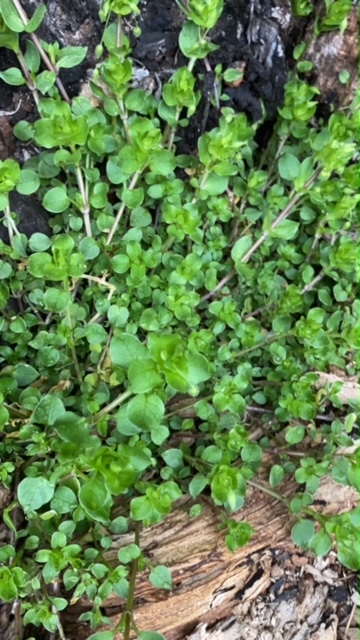
3.) Chickweed (Stellaria media)
Chickweed likes to grown in moist environments and is quick to wilt in the summer heat.It’s tender, stringy, and rarely grows more than a few inches up off the ground. Leaves are small, teardrop- to egg-shaped with a pointed tip, and grow opposite each other along the stem.
Flowers (when present) are distinctive and tiny, featuring five white petals with deep clefts that might lead you to believe they are actually ten. The flower stem and the sepals—the leaves around the base of the flower—are covered with very fine hairs.
One unique defining characteristic of chickweed is a single line of hairs—running along the length of each stem. This is a pretty unusual trait for a plant, which makes it a great way to differentiate common chickweed from mouse-ear chickweed, (which is edible but covered in fine hairs and less pleasant to eat) and scarlet pimpernel, the poisonous lookalike. (Scarlet Pimpernel has a square stem and red, white, blue or more commonly, salmon-colored 5 petal flowers vs. chickweed which has a round stem and deeply cleft 5 petal flowers)
Uses:
Chickweed is similar to yellow dock and cleavers in that it aids in moving lymph, has diuretic properties and helps reduce inflammation. It’s a great source of vitamin C, calcium, magnesium, and potassium and it is also a choice edible that most people like to use fresh in salads, omelettes (pictured below: my son snagged some and added it to his breakfast) and fritters.

As always, I am not a doctor and not giving medical advice. If you choose to forage please do so responsibly and research the plants you consume before you consume them, always trying new plants in small amounts before eating more. There is loads more info about all three of these plants and this post is just meant to be a small taste of what you might find if you start down the foraging rabbit hole. Bon Appetite!
#foraging #nature #wildfood #forage #forager #foragedfood #foragingforfood #wildfoodlove #bushcraft #wildedibles #herbalism #foodforfree #survival #foraged #food #herbalist #chickweed #cleavers #tea #yellowdock #curlydock #spring #springdetox #detox #herbaldetox #naturalremedies #herbalistsofinstagram #medicinalherbs #health #wellness #healthylifestyle #diuretic #diureticherbs

 Thorn and Thistle Apothecary